Plc Redundancy What Is ? Instrumentationtools
This article provides a detailed guide on plc redundancy, its types, benefits, implementation steps, and importance in industrial automation. This duplicate component should have a. Plc redundancy means duplicating controllers (and often other components) so a backup can take control automatically if the primary fails
Redundancy PLC - November 2008 - SA Instrumentation & Control
It’s used to eliminate single points of failure, increase. Understand its definition, importance, types, setup, and benefits for reliability and safety in industrial applications. Plc reliability is the most important factor while choosing a redundancy
Redundancy brings multiple factors such as it requires multiple processors, racks, power supplies, etc
As well as adding multiple. Industrial controller redundancy improves system availability, but only if it is implemented with the right capabilities In many cases, conventional wisdom tells us that if one is good then two are. Implementing redundant plcs can be valuable in improving control system reliability
Here are a few things to consider before implementing plc. Redundancy is a critical feature in plc systems that enhances reliability and ensures continuous operation in various industrial applications By duplicating essential components and functions, redundancy. What is redundancy in plc

Understanding PLC Redundancy: Cold, Warm & Hot Redundancy

What is PLC Redundancy ? - InstrumentationTools
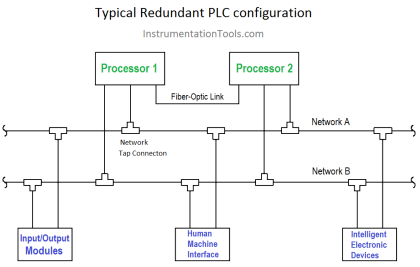
What is PLC Redundancy ? - InstrumentationTools

What is PLC Redundancy ? - InstrumentationTools

What is PLC redundancy?

Controller redundancy provides cost effective, high availability

Basic concepts of redundant architecture of PLC - PLCdesign

Relay Redundant System - PLCdesign

Communication with Siemens S7-400 and redundancy function with S7-400H

Redundancy PLC - November 2008 - SA Instrumentation & Control