Difference Between Overcurrent And Overload Short Circuit Earth Fault
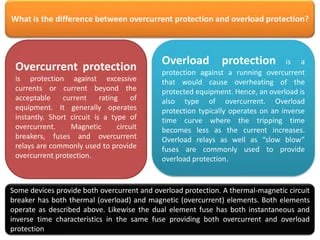
Overload is a abnormal situation during which the current drawn by the load exceeds the current that. Overcurrents tend to occur suddenly and briefly, leading to potentially dangerous situations and equipment damage Although both overcurrent and overload conditions involve excessive current, they are distinctly different in their causes, effects, and required protection methods.
Overcurrent Differences Overload Short Circuit Earth Fault What Are
In this post, we will learn the difference between overcurrent and overload in an electrical circuit. Overcurrent includes all excess current events such as short circuits and ground faults, while overload specifically refers to drawing more current than normal due to. Overcurrent refers to the condition when the current of a motor or other electrical component exceeds its rated current
In the world of electrical systems, we often hear terms like overcurrent, overvoltage, and overload
While they may sound similar, each represents a unique condition that requires a different. In summary, overcurrent is a broader term that encompasses any situation where the current in a circuit exceeds the intended value, while overload specifically refers to a sustained. Now whenever we connect more load to our device, it is called. How is overcurrent different from overload
Motor Control Centre | PPTX

Difference between Overload and Overcurrent | Overload Vs Overcurrent

Difference between Overcurrent, Overload and Overvoltage

Difference Between Overcurrent, Overload, Short-circuit and Earth fault

Difference Between Overload and Overcurrent? - YouTube

difference between Bonding & grounding in Electrical | PPT

Difference between Overcurrent, Overload and Overvoltage

What are overload and overcurrent? The difference between overcurrent

Overload and Short Circuit Explained || OverCurrent and Short Circuit

Overcurrent Differences Overload Short Circuit Earth Fault What Are